Sunday, 3 February 2013

OnAir Camcorder for Travels

OnAir Camcorder for Travels

With the OnAir Camcorder we can record and/or live stream your videos in real time to share with friends and family using social accounts or plain old video channels. . Yep, the users face pops up as a blurb on the screen and this is all thanks to the dual lenses. WiFi and 3G technologies support, hook up the camcorder to the Internet for live broadcasting. Clean design and simple aesthetics.


Concept of LED Watch with Built-in Camera!

Concept: LED Watch with Built-in Camera!

Thecamera  lens is in the center of the design, with white and blue LEDs surrounding it.  The outer ring is hours, middle is minutes in groups of 5, and the center LED ring is single minutes.  When a picture is taken using the center button, the white LEDs flash once, and when the picture is uploaded successfully to your phone, the blue LEDs flash twice. 

When people check their watch, the vantage point of the watch would be perfect to take a profile picture. Those who change their profile picture several times a week would love this watch, just get your friends together,  post it to your profile.


Concept of Sci-Fi LED Watch

Concept: Sci-Fi LED Watch

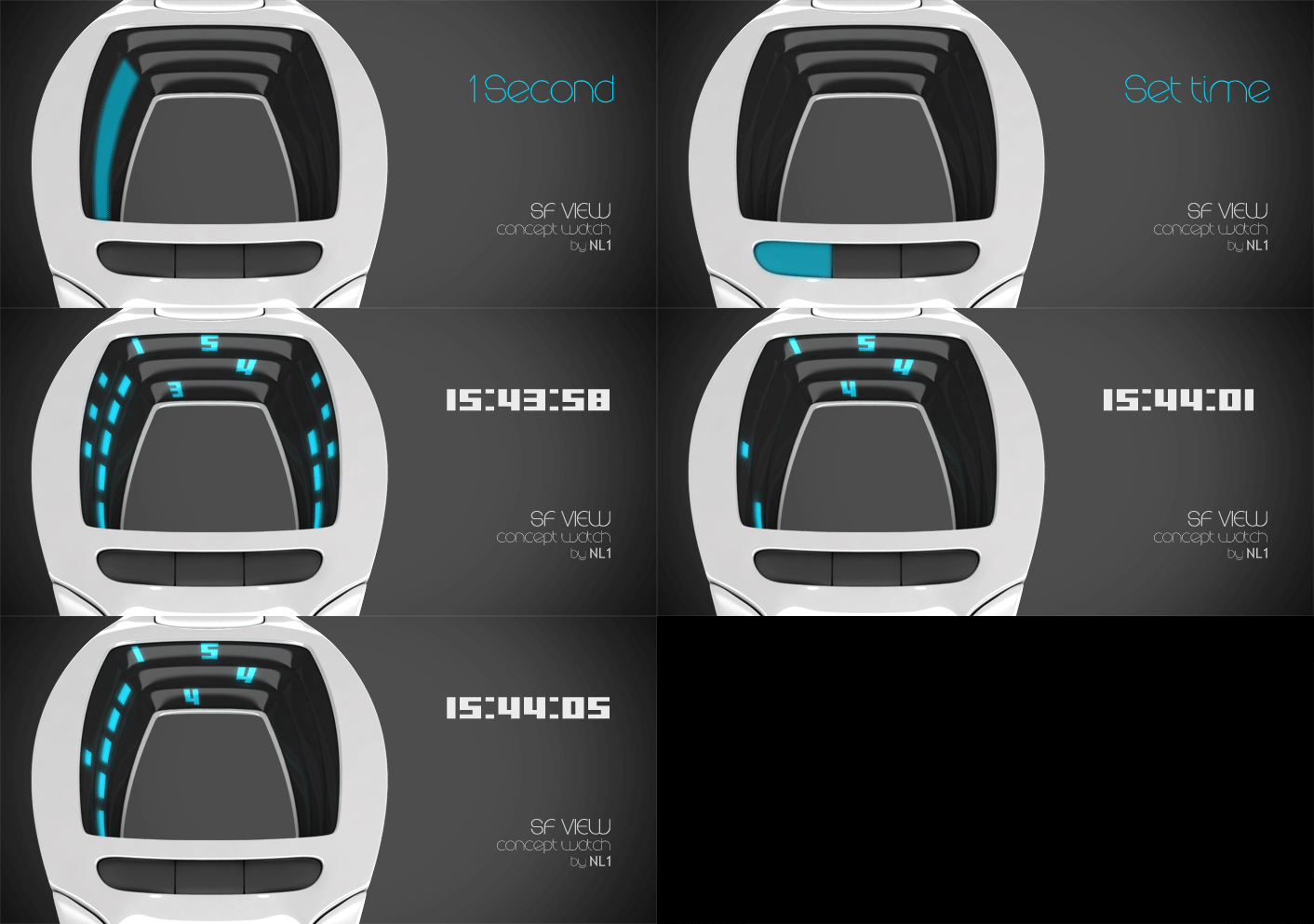
A sci-fi shaped watch with a 3-part display that reminds the inside of a spaceship flight deck.  Hours and minutes are displayed with digits on the main screen (from left to right and from top to bottom), while seconds are shown with strokes on the sides.  The display gives the impression of a “private panoramic screen”.  LEDs are turned on for a few seconds when hitting the central button. 


The Invisible OLED Laptop to End All Laptops


The Invisible OLED Laptop to End All Laptops

It’s only a proof of concept, but this is laptop with a clear OLED screen—but a stone’s throw from those floating 3D displays of Avatar. Practical? Not necessarily. The future? OBVIOUSLY.

The resolution, I don’t know. It’s pixely, but let’s not quibble.

You see right through the thing, then something appears on the screen (like a white background), and you can’t see through it anymore.

Are you processing this? No, you can’t be. It’s only 2010. Man wasn’t prepared for this kind of technology yet. The brain hasn’t evolved enough. We’re primates. Squirrels. Slugs.

Maybe in 100 or 200 years, the great artists of the world will reflect on what’s happened today and make some sort of sense of it all. Until then, we’ll just keep on breathing, in, out. Until then, we’ll weep.


Flexible OLED technology

What is the OLED technology all about?


OLEDs are made from organic (carbon based) materials that emit light when electricity is applied. Because OLEDs do not require a backlight and filters (unlike LCD displays), they are more efficient, simpler to make, and much thinner. OLEDs have a great picture quality – brilliant colors, fast response rate and a wide viewing angle.

LG 15-inch OLED prototype

OLEDs can also be used to make OLED  – thin, efficient and without any bad metals.


OLLA White Light Prototype

OLED materials have been discovered back in 1960, but only in the past 20 years or so have researchers started to actually work on the technology. A complete. You can read more about OLED displays and advantages in our page.

How do OLEDs work?

The basic structure of an OLED is a cathode (which injects electrons), an emissive layer and an anode (which removes electrons). Modern OLED devices use many more layers in order to make them more efficient, but the basic functionality remains the same.

How an OLED panel is made

Making an OLED involves several steps: taking a substrate, cleaning it, making the backplane (the switching and driving circuitry), depositing and patterning the organic layers and finally encapsulation the whole thing to prevent dust, oxygen and moisture damage.

There are several ways to deposit and pattern the organic layers. Currently all OLED displays are made using vacuum evaporation, using a Shadow Mask (FMM, Fine Metal Mask) to pattern. This is a relatively simple method but it is inefficient and very difficult to scale up to large substrates. There are several alternatives for next-gen deposition techniques, including laser annealing and inkjet printing. These methods will be scalable and more efficient than vacuum deposition.

OLED materials

There are several types of OLED materials. The most basic division is between small-molecule OLEDs and large molecule ones (called Polymer OLEDs, or P-OLEDs). Almost all OLEDs made today are SM-OLED based. These materials are evaporable and far more advanced than P-OLEDs. P-OLEDs had great promise and are solution processable (and so can be used in InkJet printing and spin-coating fabrication methods). Intensive research is being performed to develop efficient solution-processable SM-OLEDs.

Another interesting division is between Fluorescent and Phosphorescent materials. Fluorescent materials last longer (and were discovered first) but are much less efficient than Phosphorescent materials. Most people agree that the future of OLEDs (especially in large-area displays and lighting panels) lie with Phosphorescent materials, although there are still challenges in developing a long-lasing blue Phosphorescent OLED. It is possible to combine these materials though, and today Samsung for example use a red PHOLED together with Fluorescent green and blue. Is pioneering PHOLED research, holding basic patents in this area.

AMOLED vs PMOLED

These terms relate to the driving method of the OLED display. A  (Passive-Matrix OLED) is limited in size and resolution, but is cheaper and easier to make than an (which uses an Active-Matrix). An AMOLED uses an active-matrix TFT array and storage capacitors. While these displays are more efficient and can be made large, they are also more complicated to make.

displays are used in mp3 players or secondary displays on cell phones while AMOLEDs are used in smartphone displays, digital cameras and TVs.

Challenges

The two major challenges facing the OLED industry is the lifetime of the panels (OLED panels still lag behind plasma and LCD displays) and production scaling beyond Gen-5.5.

OLED technology today

Today OLED displays are used mainly in small (2″ to 5″) displays for mobile devices such as phones, cameras and MP3 players. OLED displays carry a price premium over LCDs, but offer brighter pictures and better power efficiency – making it ideal for battery powered gadgets.


Samsung Galaxy S

Making larger OLEDs is possible, but difficult and expensive. There are some OLED TVs available, but these are expensive. Sony has announced the XEL11quot; OLED TV back in 2007 – at about $2,500 (they aren’t producing it anymore and now focus on professional OLED monitors). LG is also offering an OLED TV (the 15″ ) which is also expensive and isn’t being mass produced. Mass production of price-competitive sets will probably begin towards the end of 2012 or early 2013.

In the OLED lighting market, several companies (such as Philips, OSRAM and Lumiotec) are already shipping OLED panels, but these are small and very expensive, mostly used in premium lighting fixtures and as experimental design kits.

Future Tech: Transparent / Flexible OLEDs

In the future, companies will be able to produce  and OLED panels. This will open up a whole world of exciting applications, such as:


  • Curved OLED displays, placed on non-flat surfaces
  • Rollable screens
  • Wearable OLEDs
  • Transparent OLEDs embedded in windows
  • Exciting new OLED lamp designs

And many more we cannot even imagine today…


TRI 4.1 Flexible AMOLED prototype

Flexible OLEDs require that the entire device is flexible – including the electronics and the encapsulation layer. Several companies are working on this technology, using either plastic or metal based displays (it’s also possible to use very thin flexible glass). It isTransparent OLEDs are also difficult to make, although these are already in production: since May 2011 for mobile phones and other applications.

Flexible OLED displays

OLED is a new display technology. Using light-emitting organic materials, beautiful and efficient displays can be created. OLEDs are very thin, and in fact can be put on flexible materials (plastic or metal foil). So it’s possible to make bendable, flexible displays. Because these displays will not be covered with glass, they’ll also be more durable – and virtually shatter-proof.

Flexible OLED products

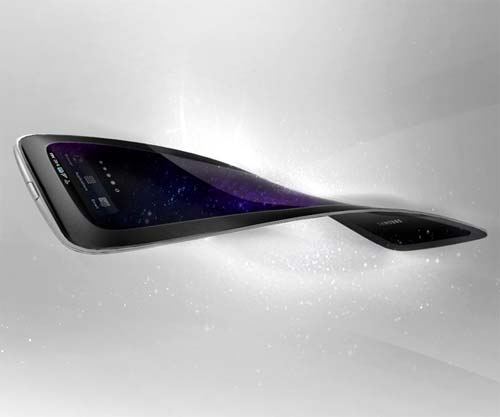
Flexible OLEDs are still in the R&D phase – and there aren’t any products on the market yet. Samsung seems to be the closest to commercialization, and the company said that probably for mobile phones. These will probably be curved OLEDs that will not be bendable.

Helicopter Concept by Héctor Del Amo

Helicopter Concept by Héctor Del Amo

The concept of helicopter Spanish designer Héctor Del Amo (Hector del Amo) is very similar to the figure zero. Hence his navzvanie ZERO. Single model should serve as a personal urban transport.

The shape of concept of helicopter creared by Spanish designerresembles the zero. Hence it’s called ZERO. This model should serve as a personal urban transport. Quite intersting solution considering size of urban congestion. Take a look!


The World’s First Smart Bag

Phorce: The World’s First Smart Bag


A BAG THAT CHARGES ALL YOUR DEVICES, COMMUNICATES WITH YOUR SMARTPHONE, AND TRANSFORMS FROM A MESSENGER, TO A BACKPACK, OR BRIEFCASE.


POWER YOUR ENTIRE LIFE. ON THE GO.
 SAY GOODBYE TO DEAD BATTERIES.


True mobility has arrived.

Phorce is the world’s first smart bag.

We live in the mobile age. You can wake up in San Francisco, spend the afternoon in New York, and be back in the West Coast right on time for drinks. Whether you walk or ride around your hometown, drive to another city, or fly to another continent- your trusty bag is always with you.

Unfortunately bags haven’t changed much over time, so they’re a little outdated. We designed Phorce to be the ultimate bag for the mobile age. Phorce can hold lots of stuff in its minimalist design. It can power all your devices, even MacBooks! It can communicate with your smartphone. It can transform from a messenger bag into a backpack, or briefcase. And so much more…

Charge all your devices.

Phorce can charge up to 3 usb-devices simultaneously. Charge smartphones, tablets, iPods, GoPro and other cameras, smart watches, portable speakers, noise-canceling headphones, and thousands of other devices.

Power your MacBook.

On top of charging all your other gear, Phorce for Mac can also power a MacBook for up to 7 extra hours*. So leave that bulky wall charger at home, and enjoy the freedom to work (or play) from anywhere.

Serious mobile power.

Thanks to its integrated lightweight battery pack, Phorce is powerful enough to charge an iPhone 5 over 8 times, a Galaxy S3 about 6 times, or an iPad Mini 2.5 times. Phorce has more power than you’ll need, so it’s always there when you need it.

Communicate with your bag. Information at your fingertips.

Bluetooth & app.

Phorce connects and communicates with your smartphone via Bluetooth. The Phorce app (iOS & Android) shows you exactly how much power your bag has left and what you can do with it. Intuitive graphics display the exact number of times Phorce can still charge your devices, like your phone. You can also ask Phorce to send you notifications, for example a reminder to charge Phorce when its battery’s running low.


Loss prevention. Did you forget your bag?


Forever yours.

Losing your bag means losing a lot of valuable possessions: your laptop, tablet, keys, money, your personal files & documents, and -of course- your bag. Whether you forget your bag when rushing out the door in the morning, leaving a restaurant or coffee shop, getting off a plane, metro, or train, or out of a taxi – you’ll receive a notification on your phone as soon as Phorce is outside of your range, so you can quickly run back and rescue it from the evil clutches of your arch nemesis.

Transform. 3 bags. As easy as 1-2-3.


Messenger. Backpack. Briefcase.

What we bring, where we go, how we get there, and what we do once we get there varies from day to day. Phorce can adjust itself to your needs, thanks to its unique construction and strap system. Phorce can transform from a messenger bag, to a backpack, or briefcase in a matter of seconds, so you can carry it however you want to. Transforming Phorce requires no additional components, and can be done on the go, in a matter of seconds.

Full 360-degree expansion.

Need to bring a lot of stuff? Phorce has a 360-degree expansion zipper you can quickly create over 240 cubic inches (4000 cm3) of extra space. Why choose between a compact bag and one that holds a lot of stuff, when you can have both?

Travel superstar. A frequent flyer’s best friend.


Enjoy the journey.

Phorce makes traveling more enjoyable. An especially-designed opening on its back allows you to slide Phorce over the telescopic handles of your trolley, so you can enjoy hands- and shouldersfree travel. Phorce also has a direct-access laptop pocket to quickly remove and insert your MacBook or laptop, making security checks less of a hassle. Keep your phone charged for over a week without bringing a wall charger or travel adapter. With mobile power for all your devices, multiple carrying modes, and expandability, Phorce is a traveler’s best friend.

Advanced materials. Clean. Organized. Safe. Dry.


Organized.

With its cable management system and dedicated pockets for all your devices, Phorce keeps your gear organized. Its A4-sized front pocket and spacious main compartment are perfect for bringing along paper, pens, magazines, books, water bottles, and lots of other stuff.

Comfortable.

Magnetic black suede handles, rich padding for your shoulders & back, and anti-slip shoulder straps make Phorce very comfortable to carry – even for long periods of time.

Protect your gear.

Phorce is constructed out of a durable, water-resistant, custom-coated fabric, and features waterproof zippers to keep your gear dry. Impact-resistant padding protects your devices against shocks and bumps.

No more fingerprints.

Phorce’s laptop compartment, tablet, and smartphone pockets are lined with a special fabric that automatically cleans your devices. It’s also very smooth, making it easy to insert or remove your devices. That means hassle-free device access, and fingerprint-free displays.

Light and compact. Comfortable & Dynamic.


Engineered for comfort.

Despite all its features and technology, Phorce’s weight is comparable to other premium bags at just 3.7 lbs (1.7 kg). This means Phorce is light enough to comfortably carry around all day.

Designed for movement.

Phorce’s minimalist design allows it to be very compact while offering maximal internal storage space. Its compact form factor makes it easy to move around in crowds and tight spaces. This makes it ideal for airports, metros, shops, and crowded sidewalks.

Tech Specs. Phorce for USB. Phorce for Mac.

Phorce for USB or Phorce for Mac?

Phorce comes in 2 versions: Phorce for USB and Phorce for Mac. Both bags have the complete Phorce feature set, wireless technology, and the same powerful lightweight battery. However, while Phorce for USB can charge phones, tablets, cameras, and thousands of other USB-devices on the go, Phorce for Mac can also power MacBooks.

Phorce for USB is great for tablet users and Windows laptop users, or for MacBook users who don’t need extra power for their MacBooks. It keeps all your other devices charged and fits most Windows laptops up to 14-inches, such as the 14-inch HP Envy, and all MacBooks up to the 15-inch MacBook Pro. Phorce for Mac is great for MacBook users who -besides keeping all their other gear charged- would like to be able to use their MacBooks for hours longer without plugging into the wall.

Colors.

Phorce comes in 4 colors: black, red, dark green, and ‘voter’s choice’ which you’ll get to vote on as a backer. You’ll have 4 great colors to choose from.